
Loans vs Credit Cards: What’s Better?
loans vs credit cards UK: Compare costs, flexibility and risks to pick smarter borrowing—practical tips and examples for UK borrowers.
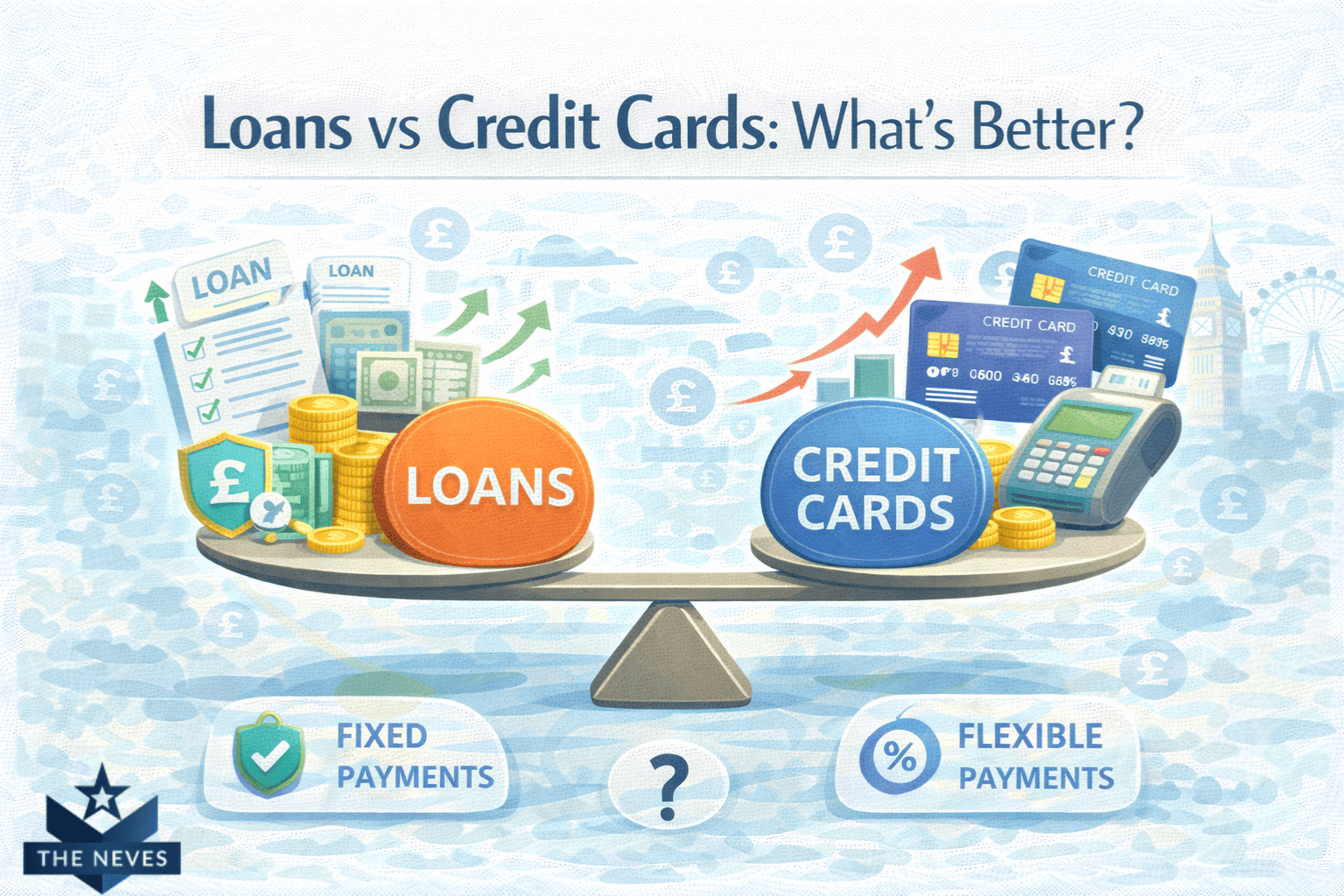
loans vs credit cards UK can feel confusing—lower rates or more flexibility? I’ll show real examples and clear steps so you can weigh costs, perks and risks and make a decision that fits your situation.
How interest rates, APR and fees compare
Interest rate is the basic charge lenders add to the money you borrow. APR (annual percentage rate) shows the yearly cost of borrowing, including some fees. Knowing both helps you see the true cost fast.
Understanding interest rate vs APR
The interest rate tells you how much interest builds each month. APR converts that cost into a yearly figure and can include setup or arrangement fees. For loans, APR often reflects a fixed annual cost. For credit cards, APR is usually variable and applies to carried balances.
Common fees to watch
- Arrangement or setup fee: A one-time charge on some loans that raises the effective cost.
- Balance transfer fee: A percentage charged when you move card debt to another card, common on 0% deals.
- Annual fee: Yearly charge for certain credit cards with perks or rewards.
- Late and over-limit fees: Extra costs that can make cards much more expensive if payments are missed.
- Early repayment fee: Some loans charge for paying off the debt early, which can reduce the benefit of lower rates.
Example comparison
Imagine you borrow £5,000 and repay over 3 years. A personal loan at 6% fixed has monthly payments around £152 and total interest near £475. The same £5,000 on a card with 18% APR (if you paid it down steadily over 36 months) would cost roughly £181 per month and about £1,500 in interest. That shows how a loan can be far cheaper for planned, medium-term borrowing.
How to compare offers
- Check the interest rate and the APR. Use APR to compare total yearly cost when fees apply.
- Calculate total amount repayable: monthly payment × months. That shows true cost over time.
- Watch promotional periods: 0% APR cards can help short-term, but note transfer fees and the rate after the deal ends.
- Factor flexibility: credit cards let you borrow and repay often, while loans give a fixed schedule and can be cheaper for larger sums.
- Read terms for early repayment and penalties before you sign.
Use a simple calculator or bank comparison tool to run numbers for your exact loan amount and term. Seeing the monthly payment and total cost side by side makes the choice clearer.
When a personal loan makes more sense than a card
If you need one clear answer: a personal loan often makes more sense for a single, planned cost that you will repay over months or years. Loans give a fixed monthly payment, predictable interest, and usually lower rates than carrying a card balance long term.
Best situations for a personal loan
- Large one-off purchases: home improvements, a car, or an expensive appliance where you know the total cost.
- Debt consolidation: combining multiple high-interest card balances into one loan can cut interest and simplify payments.
- Planned borrowing over 12+ months: if you need a predictable plan to repay, loans often cost less than cards.
- When you want a fixed term: loans stop you from carrying a balance indefinitely and can protect against rising card APRs.
How to compare costs
Look beyond the headline rate. Check the APR, fees, and total amount repayable. Example: borrow £10,000 for 5 years. A 6% fixed loan costs about £193 per month, total repayable ~£11,580. The same amount on a card at 18% APR (if paid over 60 months) might be ~£257 per month, total ~£15,444. That difference shows how much extra high card rates can add.
Other factors to consider
- Flexibility: credit cards let you borrow again without reapplying; loans are one-off sums with set terms.
- Fees and penalties: watch arrangement fees, balance transfer charges, and early repayment charges on loans.
- Impact on credit: a new loan can improve your credit mix and lower credit utilisation, but missed payments harm your score.
- Promotions: 0% balance transfer cards can beat a loan short term, but check transfer fees and the rate after the promo ends.
- Secured vs unsecured: secured loans may offer lower rates but risk your asset; unsecured loans avoid collateral.
Run the numbers with a simple calculator: compare monthly payment and total repayable for each option. If you value certainty, lower long-term cost, and a clear end date, a personal loan is often the smarter choice.
Credit cards: rewards, balance transfers and hidden traps
Credit cards can offer useful rewards and tempting balance transfer deals, but they also hide fees and rules that raise costs fast.
Rewards: are they worth it?
Rewards come as cashback, points or travel perks. Check the rate (for example, 1% cashback) and any annual fee. If you earn £10 on £1,000 spent but pay a £60 annual fee, the card may cost you more than it gives.
- Redemption limits: points may expire or need a minimum to cash out.
- Category limits: higher rates often apply only to certain purchases like groceries or travel.
- Real value: compare reward value against fee and typical spend to see net gain.
Balance transfers: how they work
Balance transfer offers often give 0% for a set period. But there is usually a transfer fee (commonly 2–3%) and a higher rate after the promo ends. A fee of 3% on a £2,000 transfer adds £60 up front.
Use simple math: if your current card charges 18% APR, moving £2,000 to 0% for 12 months and paying it off saves interest, even after the fee. If you don’t clear the balance before the promo ends, the remaining debt reverts to the normal APR and costs can rise quickly.
Hidden traps to watch
- Deferred interest: some offers apply interest retroactively if terms aren’t met.
- Cash advances: these usually carry high fees and start charging interest immediately.
- Minimum payment trap: paying only the minimum stretches debt and increases interest paid.
- Promotional expiry: forgotten end dates can jump your rate from 0% to 20%+ overnight.
- Balance allocation rules: payments may go to low-interest balances first, keeping high-interest debt longer.
- Foreign transaction fees: charges on overseas purchases can add 2–3% per spend.
- Penalty APRs and late fees: missed payments can trigger much higher rates and extra charges.
Before you apply, run the numbers: include fees, promo length, and realistic paydown speed. That makes reward value and balance transfer benefit clear and helps you avoid surprise costs.
Step-by-step: decide, apply and manage borrowing safely
Start by naming the purpose and the exact amount you need. A clear goal helps pick the right product and avoid borrowing more than necessary.
Decide: needs, budget and credit
- Define the purpose: home repair, consolidation, or short-term cash? Each has better options.
- Check your budget: list income, bills and how much you can safely pay each month.
- Estimate term: shorter terms cost less in interest but raise monthly payments.
- Know your credit score: it affects the rate you’ll get. Use a free UK service to check before applying.
Apply: compare offers and prepare documents
- Compare APR, not just rate: APR shows yearly cost including some fees and helps you compare loans and cards.
- Watch fees: arrangement fees, balance transfer fees and early repayment charges can change the best choice.
- Fixed vs variable: fixed rates give certainty; variable rates can rise.
- Use a calculator: check monthly payment and total repayable for each offer.
- Prepare documents: ID, recent payslips, bank statements and proof of address speed up approval.
- Be aware of checks: soft searches don’t harm credit; hard searches can affect future applications.
Manage: set up payments and protect your score
- Set up direct debit: avoids missed payments and penalty fees.
- Pay more when you can: extra payments cut interest and shorten the term, if no early repayment fee applies.
- Keep an emergency buffer: a small savings pot prevents late payments after unexpected costs.
- Monitor statements: check monthly for errors or unexpected fees and act quickly.
- Use balance transfers carefully: only if you can clear the balance before the promo ends and you’ve included transfer fees in the math.
- Talk to your lender: if you hit trouble, ask about hardship options before missing payments.
- Check your credit report: review it yearly to spot mistakes and track improvement as you repay.
Run the numbers for your exact amount and term. Seeing monthly payments and total repayable side by side makes the safest choice clear.
Final takeaway
Start with the purpose: for a planned, medium-term cost a personal loan often gives lower rates and fixed monthly payments.
If you need flexible short-term credit or rewards, a card can work—but watch APR, fees and promo end dates carefully.
Always compare APR and total repayable, include fees, and use a calculator to check monthly payments. Set up direct debits and keep a small emergency buffer.
Choose the option that fits your budget and timeline; checking your credit score and reading the terms can save you money and stress.