
How to Reduce Debt in the UK
how to reduce debt UK: practical steps to cut repayments, negotiate with creditors, and regain financial control in months.
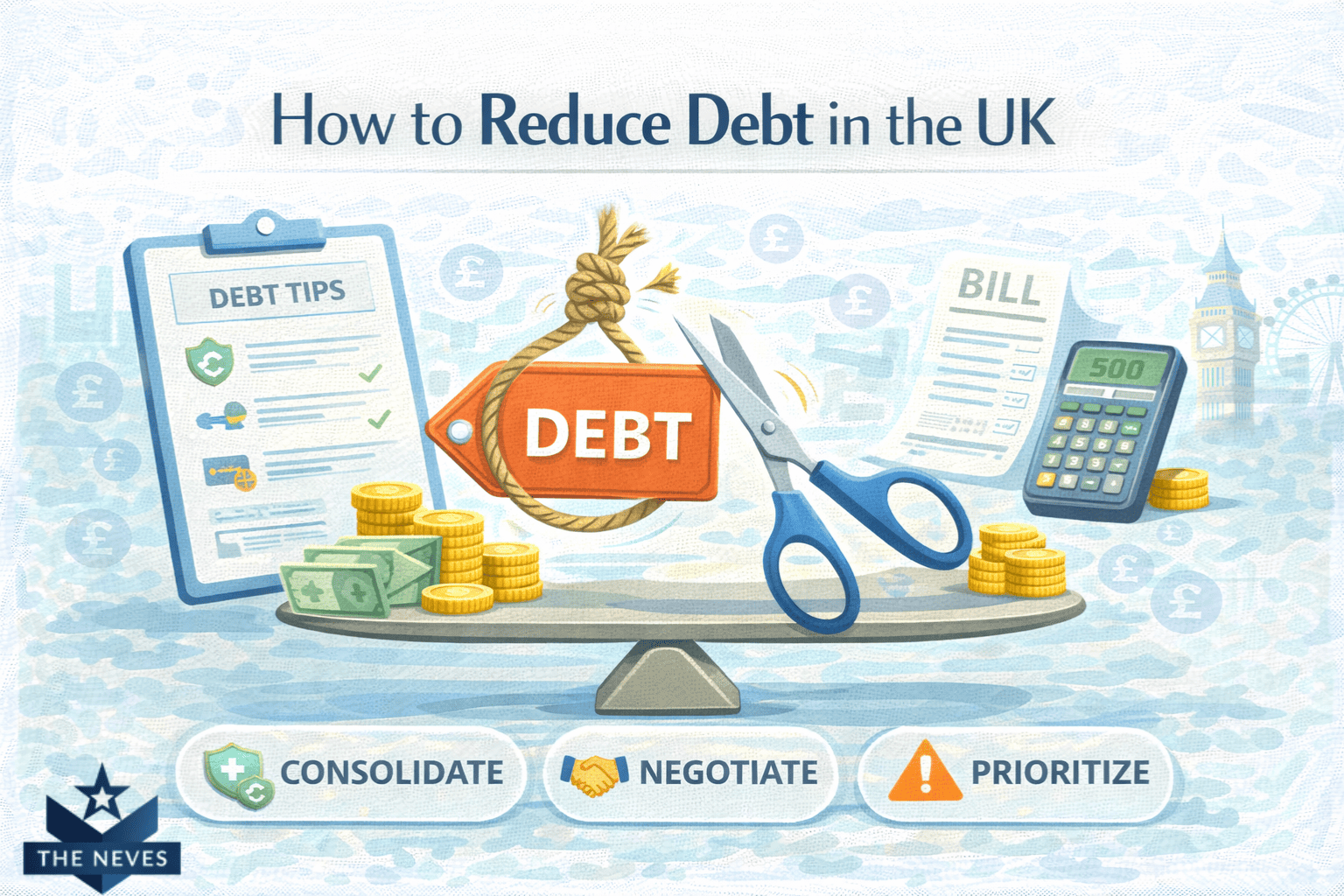
how to reduce debt UK can feel like climbing a steep hill — many households juggle multiple repayments and don’t know where to start. What if mapping your debts, prioritising high-interest balances and trying one small change this week could shorten that climb? Here are practical steps you can test right away.
Assess your complete financial picture
Start by taking a calm, clear look at every money flow in your life. List all debts, income, assets and monthly bills so you know exactly where you stand.
What to list
- Income: net pay, benefits, side earnings and any irregular receipts.
- Essential expenses: rent or mortgage, utilities, food, transport, childcare.
- Debts: lender name, type (credit card, loan, overdraft), balance, minimum payment, interest rate and due date.
- Assets: savings, investments, items you could sell if needed.
- Credit information: last credit report, missed payments, county court judgments (if any).
Build a simple debt map
Total your balances and monthly minimums. Create a one-page spreadsheet or table with columns for balance, interest rate, minimum payment and due date. This visual makes it easier to compare costs and spot urgent accounts.
How to get accurate numbers
Check the last three months of bank statements and payslips. Log into online accounts and download recent statements. In the UK, request your free credit reports from Experian, Equifax and TransUnion to confirm what lenders see.
Prioritise with purpose
Sort debts by interest rate and risk. Mark secured debts and accounts with missed payments. You can choose to target high-interest debts first or pay off small balances for quick wins — both work if you keep minimum payments on all accounts to avoid fees and damage to your credit score.
Quick actions to start today
- Gather three months of statements for income, spending and debts.
- Create a simple table or use a free budgeting app to build your debt map.
- Set calendar reminders for due dates to avoid late fees.
- Pause applying for new credit while you map debts.
- Try to set aside a small buffer (£500–£1,000) before accelerating repayments.
With accurate numbers and a clear debt map, you can choose the right repayment plan and track progress in a simple, steady way.
Build a realistic, flexible budget
Track every pound for one month. Write down pay, benefits and any extra income. Record every expense, even small ones like coffee or parking.
Steps to build a realistic, flexible budget
- Calculate net income: use take-home pay after tax and regular benefits.
- List fixed essentials: rent or mortgage, council tax, utilities, insurance and minimum debt payments.
- Estimate variable spending: groceries, transport, leisure and one-off costs. Use three months of bank statements to make these numbers realistic.
- Set priorities: cover essentials and minimum payments first, then allocate money to a small buffer and to debt repayments.
- Create flexible categories: give each variable cost a limit, but allow one swap between categories each month to avoid strict failure.
- Plan for irregular income: if pay varies, base the budget on your lowest typical month and save extra in good months.
- Review weekly: check spending every week and adjust limits if a category is consistently over or under budget.
Practical examples
If your monthly take-home pay is £2,000, cover essentials (£1,200), save a small buffer (£300) and allocate £200 to debt repayment — then split the remaining £300 across groceries and bills. Adjust these numbers to your situation.
Tools and simple rules
- Use a one-page spreadsheet or a budgeting app to log income and spending.
- Set calendar reminders for bill dates to avoid late fees.
- Keep an easy-access buffer of £500–£1,000 before increasing repayments.
- Protect minimum payments on all debts to keep your credit score stable.
Small habits that keep the budget flexible
Automate bills and savings where possible. Check subscriptions and cancel unused services. When you get a bonus or tax refund, split it: 50% to debts, 30% to buffer, 20% for a small treat. These small rules make staying on track easier.
Choose a repayment plan: snowball vs avalanche
Two common ways to speed up repayments are the debt snowball and the debt avalanche. Both require you to keep minimum payments on all accounts while putting extra money toward one chosen debt.
How each method works
- Snowball: pay the smallest balance first. Once it’s cleared, roll that money into the next smallest debt.
- Avalanche: pay the debt with the highest interest rate first. After it’s cleared, apply the freed funds to the next highest rate.
Pros and cons
- Snowball benefits: quick wins and motivation from seeing balances disappear. Drawback: may cost more interest overall.
- Avalanche benefits: saves you more money on interest over time. Drawback: slower early wins, which can feel less motivating.
Quick calculation example
Imagine three debts: £500 at 10% (min £25), £1,500 at 18% (min £45) and £5,000 at 5% (min £100). You can add an extra £200 each month.
- With the snowball, you put the extra £200 on the £500 debt so you pay £225 a month. That debt clears in about two months, freeing its payment to attack the next small debt.
- With the avalanche, you target the 18% debt, paying £245 a month to cut costly interest first. You’ll pay less interest overall, but the first payoff may take longer than the snowball route.
Which method suits you?
- Choose snowball if you need early wins to stay motivated or if small balances are a constant stress.
- Choose avalanche if you want to minimise the total interest paid and can stick to a plan without quick wins.
- Mix both if you prefer: start with a small quick win, then switch to avalanche for interest savings.
Practical steps to start
- List all debts with balance, interest rate and minimum payment.
- Decide which method fits your mindset and goals.
- Set up automatic payments so the target debt always gets the extra amount.
- When a debt clears, immediately redirect its payment to the next target.
- Review progress every 1–3 months and adjust if your income or expenses change.
Warnings and safeguards
Keep a small emergency buffer (£500–£1,000) so you don’t need new credit. Always pay minimums to avoid fees and harm to your credit score. Before using balance transfers or consolidation, check fees, eligibility and how long the low-rate period lasts. If you feel overwhelmed, seek free UK advice from charities like StepChange or Citizens Advice.
Negotiate with creditors and explore hardship options
Contact creditors early and explain your situation calmly. Most lenders prefer a simple plan you can keep to, and they may offer a range of temporary or permanent solutions if you can show hardship.
Prepare before you call
- Gather documents: recent payslips, bank statements, a list of debts and monthly expenses.
- Know your goals: do you need a short break, lower payments, or a long-term plan?
- Be realistic: suggest an affordable monthly amount, not something you may miss.
What to request
Ask clearly for options such as a payment reduction, an interest freeze, a short payment holiday, or a revised repayment schedule. If you have a one-off lump sum, ask about a settlement offer to clear a debt for less than the full balance.
How to talk to lenders
- Be polite and concise. State your income, essential costs and why you cant meet current payments.
- Ask for the name and job title of the person you speak to, and confirm any agreement in writing.
- If you dont get an immediate solution, ask how to escalate the case or request a written hardship review.
Hardship options common in the UK
- Breathing Space: a formal scheme that can give legal protections and a pause on enforcement for a set period, if eligible.
- Debt management plan (DMP): an informal agreement to pay a reduced monthly amount via a third party.
- Individual Voluntary Arrangement (IVA): a formal insolvency solution that combines debts into one affordable plan, usually lasting several years.
- Payment holidays or reduced payments: short-term fixes many lenders offer during temporary hardship.
Documentation and follow-up
Get any promise in writing and save emails or letters. Check your statements each month to confirm agreed changes. If a creditor later asks for missed amounts, show the written agreement immediately.
When to get free, independent help
If you feel unsure or a creditor is unhelpful, contact free UK debt advisers such as Citizens Advice, StepChange or National Debtline. They can negotiate on your behalf and explain formal options you might not know about.
Use consolidation and balance transfer carefully
Consolidation and balance transfers can make repayments easier, but they carry costs and limits. Know what you will pay and for how long before moving any balance.
What these options mean
Balance transfer moves one or more credit card balances onto a new card, often at a 0% interest rate for a set period. Consolidation usually means taking a single personal loan to pay off multiple debts so you have one monthly payment.
Balance transfer cards — key points
- Look at the 0% period: common lengths are 6–30 months. You must clear the transferred balance within this time to avoid interest.
- Check the transfer fee: typically 2–4% of the amount moved. A £2,000 transfer at 3% costs £60 up front.
- Watch purchase rates: new purchases on the card may be charged interest immediately.
- Missing a payment can cancel the 0% deal and trigger high interest on the full balance.
Consolidation loans — key points
- Loans give a fixed monthly repayment and fixed term, which helps budgeting.
- If the loan term is much longer, you may pay more interest overall, even if the monthly payment is lower.
- Secured loans use an asset, like your home, as collateral — this increases risk if you fall behind.
- Compare the APR and any arrangement fees to see if consolidation truly saves money.
Simple cost check
Compare the total cost: add the transfer fee plus any interest expected after the promo period, and compare that with the interest you currently pay. For many people a 0% transfer plus a small fee is cheaper if they can clear the balance inside the promo window.
Steps to decide safely
- List debts, balances, interest rates, and minimum payments.
- Calculate how long it will take to clear a balance at your planned monthly repayment.
- Compare offers: APR, transfer fee, length of offer, and what happens after the promo ends.
- Read terms for late-payment penalties and whether new purchases are protected by the offer.
- Set up direct debit for at least the minimum payment and a plan to clear the transfer before the rate ends.
Warnings and alternatives
- Consolidation and transfers do not erase debt — they change the payment route. Keep payments steady to avoid deeper trouble.
- Avoid secured loans unless you understand the risk to your home.
- If offers sound too good to be true, double-check fees, eligibility and small print.
- If you are unsure, seek free advice from UK charities like Citizens Advice, StepChange or National Debtline.
Increase income and cut nonessential spending
Look for practical ways to boost income and cut small luxuries that add up. Even modest changes can free money for debt repayment.
Practical ways to increase income
- Sell unused items: list clothing, tech or furniture on local marketplaces or auction sites.
- Do odd jobs or freelance: offer tutoring, gardening, cleaning, or online freelance work in your skills.
- Use gig apps carefully: food delivery or courier shifts can fit evenings or weekends — track earnings after costs.
- Request extra hours: ask your employer about overtime or extra shifts if available.
- Rent out space: consider a spare room or garage for short-term lets or storage, following local rules.
Smart cuts to nonessential spending
- Review subscriptions and cancel those you rarely use — streaming, apps or magazines can cost £5–£15 each month.
- Switch to cheaper brands for groceries or buy in bulk for staples to save immediately.
- Trim energy bills: use a thermostat schedule, draught-proof windows and compare suppliers for a better deal.
- Cut impulse buys by waiting 48 hours before a nonessential purchase; many fade after a day or two.
- Pause memberships you don’t use often, like gym fees, and replace them with low-cost home workouts or local classes.
Small habits that add up
- Pack lunch instead of buying one — this can save £3–£6 per day.
- Plan meals and shop with a list to avoid waste and reduce supermarket overspend.
- Set a weekly cash allowance for leisure to keep card spending in check.
- Automate savings: have any extra income go straight to a “debt” pot so it’s used for repayments, not spending.
How to prioritise extra cash
Decide whether extra income will go to your emergency buffer or straight to debt. A good rule: keep a small buffer (£500–£1,000) for surprises, then funnel further gains into the highest-priority debt.
Quick examples
If you sell a £100 item and add a £50-per-month gig income, that could allow an extra £150 a month toward debt. Over a year, this reduces the balance and the interest you pay.
Keep it sustainable
Choose changes you can keep long term. Short, intense pushes may help at first, but steady extra income and smaller permanent cuts give more reliable progress.
When to seek free or professional debt advice
If bills are mounting, letters arrive, or you feel unable to cope, seek help early. Free advisers can guide you and spot options before problems grow.
Clear signs you should get advice
- You can’t pay minimum payments on time.
- Creditors threaten court action, bailiffs, repossession or county court judgments (CCJs).
- Your rent, mortgage or essential bills are at risk.
- You rely on payday loans or high-cost credit to get by.
- Debt is affecting your health, work or ability to care for family.
Free versus professional advice
Free debt advice comes from charities like Citizens Advice, StepChange and National Debtline. They are independent and offer practical plans, negotiation help and referrals. Professional advice means paid services: insolvency practitioners, solicitors or commercial debt firms that handle formal solutions like IVAs or bankruptcy.
When to choose paid help
- Consider paid professionals if your case needs formal insolvency, legal representation or complex company debt work.
- Paid services can arrange formal solutions but will charge fees. Always ask for a clear quote.
What to take to an appointment
- Recent payslips and benefit letters.
- Three months of bank statements and a list of monthly bills.
- Copies of creditor letters and account statements.
- Details of assets and any court documents.
Questions to ask an adviser
- What options are available to me right now?
- Do you offer a written plan or record of advice?
- Are there any fees and who pays them?
- How will this affect my credit file and long-term finances?
- Can you negotiate with my creditors or refer me to a specialist?
How to pick a trustworthy professional
- Check credentials: insolvency practitioners should be licensed, and solicitors should be regulated by the Solicitors Regulation Authority.
- Read reviews and ask for references or a clear fee breakdown.
- Avoid firms that demand large upfront fees or pressure you into one solution.
- Try free charities first; they may refer you to a reliable paid specialist if needed.
Immediate steps while you wait
- Contact creditors to explain your situation and ask for a short pause or reduced payments.
- Keep records of all calls and any written agreements.
- If eligible, consider applying for a formal Breathing Space through a debt adviser to pause enforcement action.
Final steps to reduce debt
Small, steady actions make a big difference when tackling how to reduce debt UK. Start with a clear list of debts, a simple budget and one repayment plan you can stick to.
Keep making minimum payments, choose a method that suits your motivation, and contact lenders early if you need relief. Use balance transfers or consolidation only after checking fees and risks.
Set one small goal this week: gather three months of statements or add an extra £10–£50 to a target debt. These tiny wins build momentum and lower interest costs over time.
If you feel stuck, get free, expert help from UK charities like Citizens Advice or StepChange. With a plan and steady steps, you can regain control and make real progress.