
How Credit Scores Work in the UK
how credit scores work UK: Learn what influences your score, how lenders use it, and simple steps to improve your chances of approval.
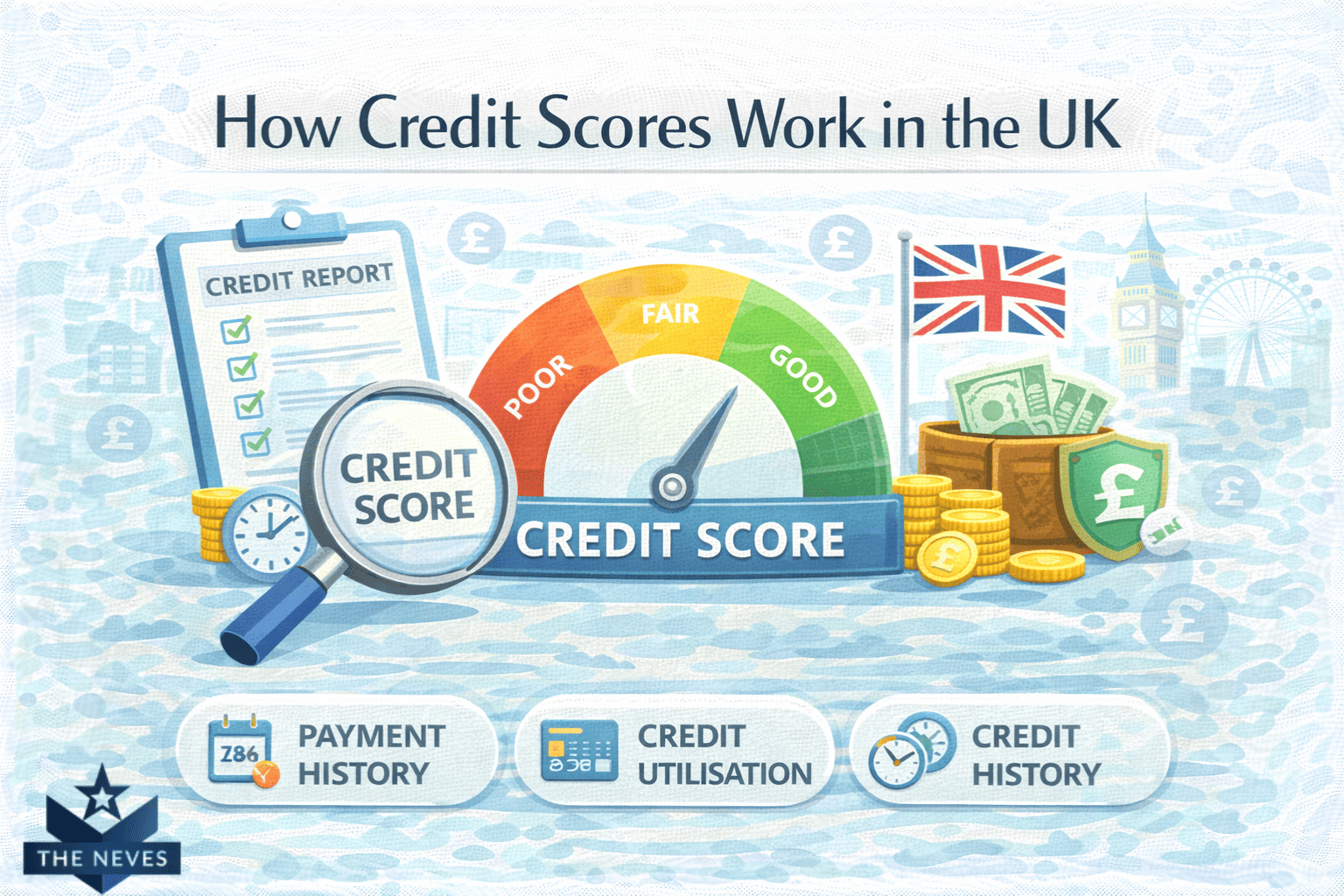
how credit scores work UK might seem baffling, but it shapes the interest rates and offers you get. Ever wondered why one lender approves you and another declines? I’ll explain the basics, point out common traps and suggest straightforward actions you can try today.
What is a credit score in the UK?
A credit score in the UK is a simple number lenders use to judge how likely you are to repay borrowed money. It sums up information from your financial history so banks and lenders can decide on loans, credit cards, or mortgages.
How lenders use your score
Lenders check your score to estimate risk quickly. A higher score usually means better interest rates and easier approvals, while a lower score can lead to higher costs or refusals. Lenders combine the score with their own checks, like income and employment.
What affects your score
Several clear factors shape the number:
- Payment history — paying bills and credit on time helps your score.
- Credit usage — keeping balances low versus your limits is positive.
- Length of credit history — older accounts can boost trust.
- Recent searches and applications — many hard checks in a short time can lower the score.
- Public records and missed debts — county court judgments or defaults harm the score.
Credit score versus credit report
Your credit report lists accounts, addresses, and repayment records. The credit score is a calculated summary based on that report. You can check the report to see the raw data and spot errors that might be dragging the score down.
Typical score ranges (examples)
Each credit reference agency uses its own scale. Common examples are:
- Experian: a scale that runs up to about 999.
- Equifax: a scale that runs up to about 700.
- TransUnion: a scale that runs up to about 710.
These ranges help you see where you stand, but specific lender criteria can vary. Checking your report and understanding the main factors gives you the best chance to improve your score.
How credit reference agencies calculate scores
Credit reference agencies (CRAs) turn raw financial records into a single number that helps lenders judge risk. They collect data, apply a scoring model, and update the result when new information arrives.
Data sources and reporting
CRAs get information from banks, credit card companies, mortgage lenders, and public records. Typical items include account opening dates, balances, payment history, addresses, and any county court judgments or bankruptcies. Most lenders report monthly, so scores can change each month.
Main factors and how they influence scores
- Payment history: on-time payments boost your score; missed or late payments hurt it most.
- Credit usage: the share of your available credit you use — lower is better.
- Length of history: older accounts usually help because they show a longer track record.
- Recent activity: many new accounts or hard searches in a short time can lower the score.
- Public records and defaults: county court judgments, defaults, or bankruptcies have a strong negative effect.
How agencies weight and model data
Each CRA uses a proprietary model. That means the same raw data can give different scores across agencies. Some models use fixed rules and weights. Newer models may use machine learning to spot patterns lenders care about.
Handling missing or limited data
If you have little credit history, CRAs use what they can, like payment of utilities or council tax where reported. A thin file often leads to a lower or unpredictable score because there is less evidence to assess risk.
Soft checks, hard searches and timing
Soft checks let you view your own score and do not affect it. Hard searches occur when you apply for credit and can slightly lower your score for a short time. Multiple hard searches in weeks can have more impact than one isolated search.
What you can do if the data is wrong
Check your credit report from each agency regularly. If you find an error, contact the lender first to correct the source. Then raise a dispute with the CRA and provide clear evidence, such as bank statements or letters. Corrections typically show on your report within a few weeks.
Factors that affect your credit score
Several clear factors shape your credit score. Understanding each one helps you focus on practical steps to improve or protect your rating.
Key factors that influence your score
- Payment history: Paying bills, loans, and credit cards on time is the single most important factor. Missed or late payments lower your score quickly.
- Credit utilization: This is the share of your available credit you use. Keeping balances low compared with limits — ideally under 30% — looks better to lenders.
- Length of credit history: Older accounts and a longer record of responsible borrowing boost trust. Closing old accounts can shorten your average history.
- Types of credit: A mix of credit accounts (credit cards, loans, mortgage) can help, but only if managed well. Too many different accounts for no reason can be risky.
- Recent applications and hard searches: Each full credit application can cause a hard search, which may slightly lower your score. Multiple hard searches in a short period increase the impact.
- Public records and defaults: County court judgments, bankruptcies, and defaults have a very negative effect and can stay on records for years.
- Electoral roll and ID data: Being on the electoral register and having consistent personal details helps match records and reduces errors that might harm your score.
Practical tips tied to each factor
- For payments: set up direct debits or reminders so you never miss a due date.
- For utilization: pay down card balances and avoid maxing out limits before applications.
- For history: keep older accounts open if they cost little; only close accounts after weighing the effect on your average age of accounts.
- For searches: use eligibility checkers that do soft searches before applying for new credit.
- For records: check your credit reports regularly and correct errors quickly by contacting the lender and the credit reference agency.
Knowing these factors gives you clear actions: prioritise on-time payments, control balances, limit new applications, and fix any incorrect information on your report.
How to check your credit score for free
You can check your credit score for free using official credit reference agencies and trusted apps. Doing this regularly helps spot errors and prepare before applying for credit.
Where to check for free
- Visit each major credit reference agency: Experian, Equifax, and TransUnion—they each provide ways to view your file or score.
- Use trusted third-party services like ClearScore or Credit Karma, which show scores and key report details at no cost.
- Some banks and budgeting apps also offer free score snapshots—use them as an extra check, not the only source.
Steps to check your score safely
- Create accounts on the chosen sites and verify your identity with accurate details.
- Choose the free report or free plan—avoid trials you must cancel to prevent charges.
- Use a secure connection and a strong password. Enable two-factor authentication if available.
- Prefer soft-search eligibility checks before full credit applications to avoid hard searches that can affect your score.
What to look for on the report
- Personal details: name, address history, and date of birth must match your records.
- Account list: check open and closed accounts, balances, and payment history.
- Searches and applications: note recent hard searches and new account openings.
- Public records: defaults, county court judgments, or bankruptcies should be listed accurately.
If you find an error
Contact the lender that supplied the information first and ask them to correct it. Then raise a formal dispute with the credit reference agency and upload evidence like bank statements or letters. Monitor the report until the change appears.
How often to check
Check at least once a year and before big credit steps like applying for a mortgage. If you suspect fraud or see unexpected changes, check immediately and freeze or flag accounts where possible.
Regular free checks give you control: spot mistakes early, understand what lenders see, and take small actions to protect or improve your score.
Practical steps to improve a low credit score
Check your credit reports: Get free reports from Experian, Equifax and TransUnion. Look for wrong accounts, incorrect balances, or unfamiliar addresses.
Correct errors fast: Contact the lender that provided the data and the credit reference agency. Keep copies of bank statements or letters as proof to speed corrections.
Pay bills on time: Set up direct debits or calendar reminders. Even one missed payment can harm your score, while steady on-time payments rebuild trust.
Reduce credit utilisation: Try to use under 30% of each card limit; lower is better. If possible, pay balances early in the month and before statements close.
Avoid unnecessary applications: Use soft-search eligibility tools to check chances before applying. Multiple hard searches in weeks can lower your score.
Use credit-building products carefully: A credit-builder card or small loan can help if you use it responsibly. Pay the full balance each month and watch out for high fees or interest.
Keep older accounts open: Long-standing accounts can improve the average age of credit. Only close accounts after checking the effect on your history.
Deal with defaults and public records: If you can, repay or agree a plan. Ask lenders to mark debts as “satisfied” once paid and keep evidence of settlement.
Timeline and expectations
Some changes help quickly: fixing errors or clearing a credit card balance can show results in weeks. Major issues like defaults or missed payments may take months or years to fully recover. Consistent good habits over 6–12 months usually produce noticeable improvement.
Everyday habits that help
- Check your reports at least once a year and before big applications.
- Set up low-balance alerts and automatic payments.
- Keep a simple budget to avoid missed payments.
- Use one or two trusted services to monitor changes without causing hard searches.
Small, steady actions matter more than quick fixes: accurate reports, on-time payments, low balances and fewer applications all add up to a stronger credit profile over time.
Common mistakes that damage scores and how to fix them
Common credit mistakes can drag your score down, but many are reversible with the right steps. Below are frequent errors and clear actions to fix them.
Missed or late payments
Why it matters: Missed payments are one of the fastest ways to harm your score. Lenders record late payments and these stay on your file.
How to fix: contact the lender to set up a payment plan, and ask them to note any agreement on your file. Then keep up with payments and set up direct debits or reminders.
High credit utilisation
Why it matters: Using most of your available credit signals risk. High balances relative to limits lower scores.
How to fix: pay down card balances, spread spending across cards, or ask for a higher limit if you have a good record. Aim to keep utilisation under 30%, or lower if possible.
Many recent applications and hard searches
Why it matters: Several hard searches in a short period suggest you need credit urgently, which can reduce your score.
How to fix: use soft-search eligibility checks before applying, space out applications, and only apply when you are likely to be accepted.
Closing old accounts
Why it matters: Closing long-held accounts can shorten your credit history and raise your utilisation ratio, both of which can harm your score.
How to fix: keep low-cost, well-managed accounts open where possible. If you must close one, pick an account with a small positive impact and monitor your score afterwards.
Incorrect information or identity issues
Why it matters: Errors, mixed files, or fraud can show wrong debts or addresses and unfairly lower your score.
How to fix: check all three credit reports, note discrepancies, contact the lender that supplied the data, then file a dispute with the credit reference agency and submit proofs like bank statements or ID.
Using risky short-term credit
Why it matters: Payday loans or high-interest short-term credit can lead to missed payments and spiralling debt, hurting your record.
How to fix: avoid costly lenders, seek debt advice if needed, and replace risky credit with manageable options like a small credit-builder product used responsibly.
Everyday habits to prevent mistakes
- Check your reports regularly to spot errors early.
- Set up automatic payments for key bills.
- Keep a simple budget to avoid unexpected misses.
- Register on the electoral roll and keep your address details consistent.
Fixing these errors takes time, but steady, small changes build a stronger credit profile. Track progress with regular checks and keep documents of any corrections.
Conclusion
How credit scores work in the UK boils down to a few clear actions: check your reports, fix mistakes, pay on time, and keep balances low.
Small habits—direct debits, fewer new applications, and regular monitoring—build trust with lenders. Major problems like defaults take longer to clear, so start early.
Do a free check today, pick one thing to improve, and track progress. With steady steps you can usually see real gains within 6–12 months.